The Ethereum network is one of the most important technologies in crypto — and it does far more than move money. Whether you're curious about what powers USDT and USDC, how smart contracts work, orThe Ethereum network is one of the most important technologies in crypto — and it does far more than move money. Whether you're curious about what powers USDT and USDC, how smart contracts work, or
Learn/Cryptocurrency Knowledge/Hot Concepts/Ethereum Ne... It Matters

Ethereum Network: What It Is, How It Works, and Why It Matters

Intermediate
Apr 22, 2026James Mitchell
0m
Smart Blockchain
SMART$0.005147-0.42%
USDCoin
USDC$0.9997+0.01%
Movement
MOVE$0.01848-1.07%
The Ethereum network is one of the most important technologies in crypto — and it does far more than move money.
Whether you're curious about what powers USDT and USDC, how smart contracts work, or why gas fees go up and down, this guide covers everything you need to know about the Ethereum blockchain network in plain English.

Key Takeaways
  • The Ethereum network is a decentralized blockchain that runs smart contracts and powers thousands of applications, tokens, and DeFi protocols.
  • Ethereum operates on Proof-of-Stake consensus, where validators lock up ETH to verify transactions and earn rewards — no mining required.
  • ERC-20 is the token standard built on the Ethereum network, and major stablecoins like USDT and USDC both use it for every transfer.
  • The Dencun upgrade (March 2024) introduced blob transactions via EIP-4844, dramatically cutting fees on Layer 2 networks.
  • Pectra, Ethereum's largest upgrade to date, went live on May 7, 2025, improving staking flexibility, blob capacity, and smart wallet functionality.
  • Gas fees on the Ethereum mainnet fluctuate with network congestion — Layer 2 solutions like Base now offer the most cost-effective way to transact.

What Is the Ethereum Network?

The Ethereum network is a decentralized blockchain network launched in July 2015 by Vitalik Buterin and seven co-founders.
At its core, it is made up of thousands of independent computers — called nodes — spread across the world.
These nodes work together to store data, run programs, and record every transaction on a shared public ledger that no single person or company controls.
Unlike Bitcoin, which was designed mainly as digital money, Ethereum was built as a programmable blockchain.
That programmability is what makes the Ethereum main network the foundation for thousands of applications, digital assets, and decentralized services running around the clock.


How the Ethereum Network Works: Nodes, Validators, and the EVM

Every time you send ETH or interact with an app on Ethereum, your transaction gets broadcast to the network and picked up by validators.
Validators are people who lock up their ETH — a process called staking — to earn the right to verify and add new transactions to the blockchain.
Each confirmed batch of transactions is packaged into a block, processed by the Ethereum Virtual Machine (EVM), and permanently recorded across all nodes.
The EVM is the engine of the network — it's what allows Ethereum to run smart contracts consistently, no matter where in the world a node is located.
To use the Ethereum network, you simply connect a wallet like MetaMask, which handles all the technical communication between you and the blockchain.


Smart Contracts and ERC-20 Tokens on the Ethereum Network


What Are Smart Contracts?


Smart contracts are self-executing programs stored directly on the Ethereum network.
Once their conditions are met — say, sending payment when an item is delivered — they execute automatically, with no need for a bank, lawyer, or middleman.
This is what makes Ethereum the backbone of DeFi (decentralized finance) and NFT platforms worldwide.


ERC-20 Tokens — USDT, USDC, and More


Major stablecoins like USDT on the Ethereum network and USDC on the Ethereum network are both ERC-20 tokens, meaning they use Ethereum's infrastructure for every transfer.
When you send USDT or USDC using the ERC-20 option, you are using the Ethereum network — and you will pay an Ethereum network fee to do so.


Coins and Tokens on the Ethereum Network


Beyond stablecoins, thousands of coins on the Ethereum network exist — from DeFi governance tokens to meme coins and wrapped assets like Wrapped BTC (WBTC).
All of them rely on Ethereum's smart contract layer and pay network fees in ETH.
This is why ETH itself has real utility: it's the fuel the entire ecosystem runs on.


Ethereum Network Upgrades: Dencun, Pectra, and What's Next

The Ethereum network has gone through several major upgrades, each one making it faster, cheaper, or more secure.
The most significant shift was The Merge in September 2022, when Ethereum switched from Proof-of-Work to Proof-of-Stake, cutting energy consumption by approximately 99.95%.
In March 2024, the Dencun upgrade introduced blob transactions through EIP-4844, which dramatically reduced fees on Layer 2 networks by giving rollups a cheaper way to post data to the Ethereum mainnet.
Pectra doubled blob capacity from 3 to 6 per block, improved staking flexibility by raising the validator cap from 32 ETH to 2,048 ETH, and introduced smart wallet features that allow regular accounts to temporarily behave like smart contracts.
Looking ahead, the next planned network upgrade — Glamsterdam — targets parallel transaction execution and higher block gas limits, with the goal of further improving Ethereum's throughput and decentralization.


Ethereum Network Fees: What Gas Costs and How to Reduce Them

Every transaction on the Ethereum network requires a gas fee, paid in ETH.
Gas is a unit that measures how much computing work a transaction needs — simple transfers cost less gas, while complex smart contract interactions cost more.
The Ethereum network fee changes based on congestion: when many people are using the network at the same time, validators prioritize higher-paying transactions, and fees spike.
This is what people mean when they ask why the Ethereum network fee is so high — it's supply and demand for block space, not a fixed price set by anyone.
The good news is that Ethereum network congestion on the mainnet has eased significantly since EIP-4844, and Layer 2 networks like Base now process most everyday transactions at a fraction of mainnet cost — fees that were once several dollars are now often just cents.
If you want to reduce your Ethereum network fees, using a Layer 2 solution is the most effective approach available today.
You can also use an Ethereum network fee calculator to estimate costs before sending, which helps you decide whether to transact on the mainnet or switch to a Layer 2 option.


FAQ

What is the Ethereum network?
The Ethereum network is a decentralized blockchain platform that runs smart contracts, supports thousands of tokens, and powers most of the world's DeFi and NFT applications.


Is ERC-20 the Ethereum network?
ERC-20 is a token standard built on the Ethereum network, not the network itself — but all ERC-20 tokens use Ethereum's infrastructure.


Is USDT on the Ethereum network?
Yes — USDT is available as an ERC-20 token, meaning it runs on the Ethereum network when you select the ERC-20 option during transfers.


What is gas in the Ethereum network?
Gas is the unit that measures how much computing power a transaction or smart contract requires, and it determines how much you pay in ETH as a fee.


Why is the Ethereum network fee so high?
Fees rise during periods of high network congestion when more users compete for limited block space, driving up the price validators will accept.


How does the Ethereum network work?
Validators stake ETH to earn the right to verify transactions, which are then packaged into blocks and recorded permanently across thousands of nodes worldwide.


Is USDC on the Ethereum network?
Yes — USDC is an ERC-20 stablecoin issued by Circle that operates natively on the Ethereum network.


Conclusion

The Ethereum network is the engine behind much of what makes crypto useful — from stablecoins and DeFi to NFTs and programmable money.
With major upgrades like Dencun and Pectra already live, and more improvements on the horizon, Ethereum continues to evolve as the world's leading smart contract platform.
Ready to get started? Trade ETH on MEXC and explore the full Ethereum ecosystem today.
  • A network of nodes, contracts, and value — see our full Ethereum guide for the view from above.
Market Opportunity
Smart Blockchain Logo
Smart Blockchain Price(SMART)
$0.005147
$0.005147$0.005147
-0.29%
USD
Smart Blockchain (SMART) Live Price Chart

Popular Articles

View More
How Does Crude Oil Inventory Data Move Prices?

How Does Crude Oil Inventory Data Move Prices?

Key Takeaways: The Algorithmic Fake-Out: The initial 1-minute price spike after an inventory report is usually driven by bots trading the headline. The real "smart money" trend begins 5 to 10 minutes
What Is Remix Ethereum IDE? Features, Setup, and Safety Guide

What Is Remix Ethereum IDE? Features, Setup, and Safety Guide

If you've ever wondered how developers build apps on the Ethereum blockchain, the answer usually starts with one tool. Remix Ethereum is a free, browser-based IDE (Integrated Development Environment)
What Is an Ethereum Contract Address and How Does It Work

What Is an Ethereum Contract Address and How Does It Work

If you've ever tried to add a token to your wallet or interact with a DeFi app, you've probably come across something called a contract address. This guide breaks down what an Ethereum contract
Who Owns Ethereum? Breaking Down the Biggest ETH Holders

Who Owns Ethereum? Breaking Down the Biggest ETH Holders

Ethereum stands as the second-largest cryptocurrency by market capitalization, powering everything from decentralized finance to NFTs through its smart contract capabilities. Understanding who owns

Hot Crypto Updates

View More
The BEEG First Pump Is Over. Smart Money Is Watching for This.

The BEEG First Pump Is Over. Smart Money Is Watching for This.

Missed the first Beeg Blue Whale (BEEG) pump? This in-depth guide breaks down BEEG's tokenomics, Sui ecosystem growth, price predictions for 2026, and why MEXC is the best exchange to trade BEEG with
BEEG Down 98% From ATH — Smart Buy or Value Trap? 2026 Deep Dive

BEEG Down 98% From ATH — Smart Buy or Value Trap? 2026 Deep Dive

Is BEEG Blue Whale a buy right now or should you wait for a pullback? This in-depth 2026 guide covers BEEG tokenomics, Sui ecosystem outlook, price predictions, and why MEXC is the best platform to
Iran War 2026: Why Oil Prices Are Surging Again — And What Smart Investors Are Doing About It

Iran War 2026: Why Oil Prices Are Surging Again — And What Smart Investors Are Doing About It

Published: March 18, 2026 Last Updated: March 18, 2026 Reading Time: ~12 minutes Overview On February 28, 2026, the United States and Israel launched coordinated airstrikes on Iran under Operation

Are Crypto Whales Quietly Loading Up on BEEG? On-Chain Data Exposes the Smart Money Trail in 2026

Are Crypto Whales Quietly Loading Up on BEEG? On-Chain Data Exposes the Smart Money Trail in 2026

On-chain data reveals a surge in long-term BEEG holders and aggressive whale accumulation in Q1 2026. Discover what Smart Money signals are saying about Beeg Blue Whale (BEEG), and why MEXC is the

Trending News

View More
Treasury Freezes $344M in Iran Crypto

Treasury Freezes $344M in Iran Crypto

The post Treasury Freezes $344M in Iran Crypto appeared on BitcoinEthereumNews.com. Treasury Secretary Scott Bessent announced on April 24 that the US government
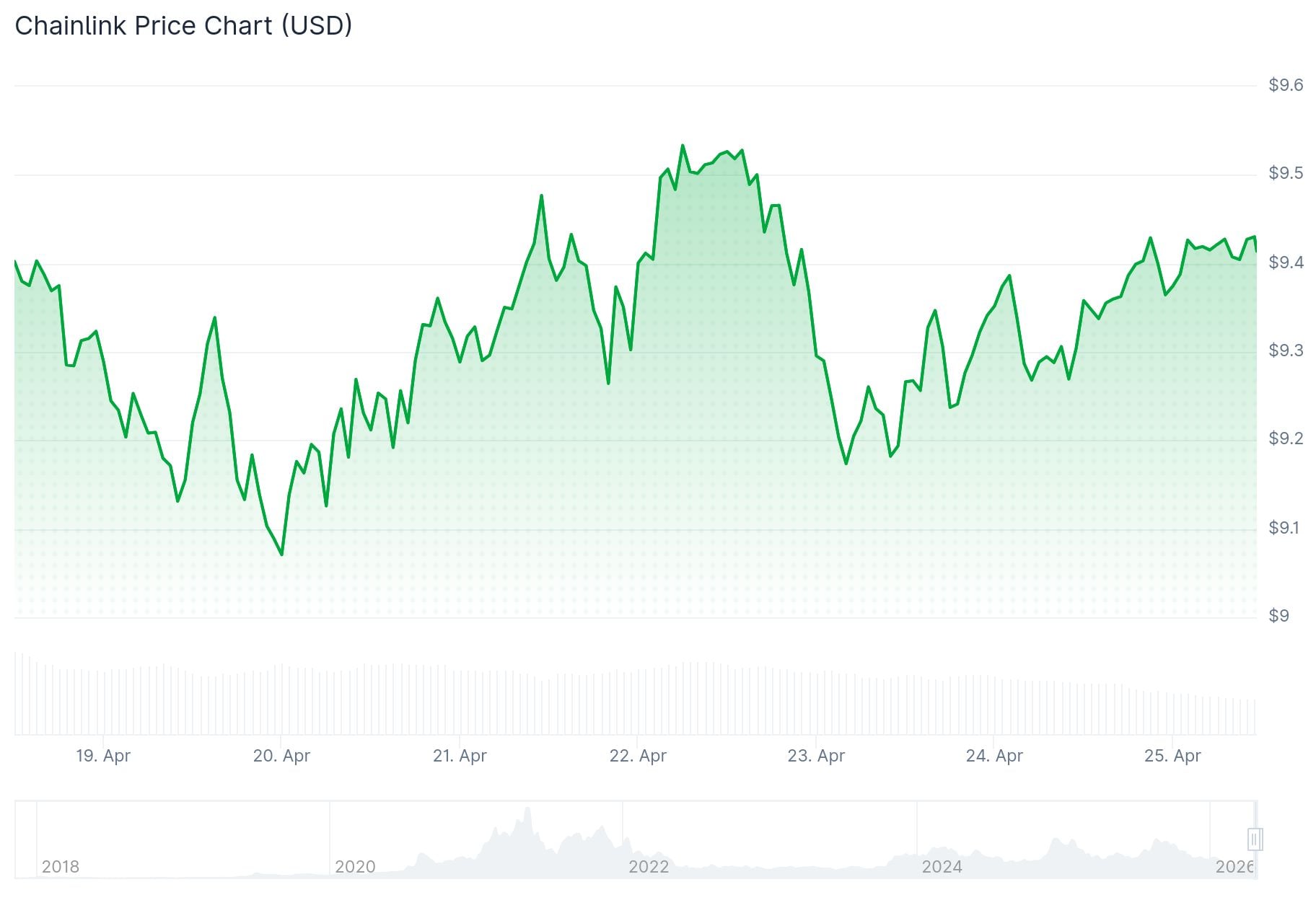
Chainlink (LINK) Price: Amazon AWS Integration Puts LINK in Focus as Tokenization Demand Grows

Chainlink (LINK) Price: Amazon AWS Integration Puts LINK in Focus as Tokenization Demand Grows

TLDR Chainlink launched its Data Standard on AWS Marketplace, giving enterprises direct access to blockchain connectivity tools. Three services are now available

A New Toy Reveals A Major Spoiler For ‘Spider-Man: Brand New Day’

A New Toy Reveals A Major Spoiler For ‘Spider-Man: Brand New Day’

The post A New Toy Reveals A Major Spoiler For ‘Spider-Man: Brand New Day’ appeared on BitcoinEthereumNews.com. Spider-Man: Brand New Day Sony In roughly the 86th

Pi Network Testnet Shows Real Progress With Live Payments and Smart Contracts

Pi Network Testnet Shows Real Progress With Live Payments and Smart Contracts

Pi Network continues to attract attention as its development moves beyond theoretical promises and into visible technical execution. While many blockchain p

Related Articles

View More
What is Pharos Network (PROS Coin)? A Deep Dive into Pharos Network's RealFi Layer-1 Ecosystem

What is Pharos Network (PROS Coin)? A Deep Dive into Pharos Network's RealFi Layer-1 Ecosystem

Pharos Network is a next-generation Layer-1 blockchain built for real-world financial applications — from stablecoin infrastructure to tokenized assets.This guide covers everything you need to know ab
Tom Lee Ethereum Price Prediction: Targets, Thesis, and What It Means for Investors

Tom Lee Ethereum Price Prediction: Targets, Thesis, and What It Means for Investors

Tom Lee — co-founder of Fundstrat and chairman of Bitmine Immersion Technologies — has become one of the most closely watched voices in the Ethereum market.His price targets range from $7,000 to as hi
What Is Ethereum Name Service? ENS Coin, Use Cases, and How to Buy

What Is Ethereum Name Service? ENS Coin, Use Cases, and How to Buy

Sending crypto to the wrong address is a real risk — one that happens because wallet addresses look like 0xb8c2...67d5, a string no one can memorize or verify at a glance.Ethereum Name Service (ENS) w

Ethereum Price History by Year: Every Major Bull Run and Crash Explained

Ethereum Price History by Year: Every Major Bull Run and Crash Explained

Ethereum has gone from a $0.31 ICO token to one of the most closely watched assets in global finance.Its price history isn't just a chart — it's a record of every major shift in the crypto market, fro

Sign Up on MEXC
Sign Up & Receive Up to 10,000 USDT Bonus